Oklahoma: forward with me.
I cross the state line with a fugitive onboard.
We just spent about 4 hours together. A whole morning of car talk, museum rooms, shared lunch, town walking and even a little shopping, like two old buddies.
But little did I know, my new friend Shawn just got released from prison for the third time and is crossing the state line because he “couldn’t be bothered reporting” to his probation officer in Arkansas.
- “You tell me that now?”
- “Yeah, I wanted to be forward with you.”
Very forward indeed.
Whatever. We’re here already, having fun. I’m not about to give him shit. Because why?
We talk about prison life. Not the movie version. No grand violence, no staged toughness. Just general population, routines, codes, boredom, survival. Still, one rule: Find out who’s the big guy and stay away from him.
Word.
Three times is a long time, I note. “Yeah, I guess I ain’t very focused.”
Right past the state line and the topic, we get to the casino. Because of course.
After a couple of nonsensical, hilarious portraits in front of the casino that draw attention, grins and some angry looks, we get to business. But first, I need a membership card. Shawn has to renew his. It’s been a while, for obvious reasons.
I show my passport and answer all the questions: where I am from, where I am going, what’s my line of work and why a Belgian with film cameras is standing in a casino at the edge of Oklahoma, asking for a player’s card. Shawn has no credit card, no valid ID, no address. Only his prison papers, mugshot included.
He gets renewed before the manager’s called in to check on me.
America has some sense of humor.
First, the slot machines to warm up. No windows. No clocks. Just rows of slot machines blinking in a light that belongs to no hour of the day, islands of tables under low lamps and carpets designed, apparently, by someone who hated sobriety. Everything flashes, rings, pays, takes back. People sit alone together, pulling levers, pressing buttons, feeding small hopes into bright machines.
Once mentally ready to lose more, we hit the poker table. Not just any poker. Ultimate Texas Hold’em. More expensive to play, but with enough upside to make losing sound like a plan.
At the table, the regulars. A man with a face carved by too many afternoons under artificial light. A trucker off work, already deep into beer number who-knows. A woman with sunglasses indoors, as if daylight itself had become an accusation. Drinks keep on coming before we ask. Chips drop and slide across the green felt. Fingers move fast. Cash moves faster.
Four hands later and a decent win indeed, we leave the table. Not exactly the usual player’s move. People at the table, eyes wide open, comment:
- “You take the win and leave? Gotta respect that.”
- “Wish I could.”
Shawn tells them that I have to go and he’s just going to say goodbye. Back in a minute.
More self-aware comments pop:
- “That’s why you come here alone.”
- “Also, so that they don’t see you cry on the way back.”
Inside, I lose it. Outside, I know he’s not joking, so I keep it in. Just.
Parking lot. Shawn tries to wingman me into taking an old lady’s portrait. Because Shawn. While she makes her escape, I shoot a last portrait of him and leave him with his hopes and dreams. And his promise of a phone call as a thank you for the ride…“someday, when someone will be okay to lend me their phone”.
The road ahead is still long. I’m headed to Muskogee, where even squares can have a ball. The day has already slipped sideways. Time to make up the miles.
Before leaving, I had wondered how this would work alone. I had travelled alone for most of my life, but not like this. Before, I was either focused on the action or trying to stay away from people altogether, somewhere in nature, waiting for an animal to appear. This time, the point is almost the opposite. People. Places. Encounters. The part I did not know how to force.
Turns out, I don’t have to force much. The cameras do part of the work. So does the accent, apparently. A friend told me before I left: “People will talk to you because you carry weird cameras and sound funny.” Annoyingly, he was right.
In a corner of Oklahoma, I reach Miami (not pronounced the same). A route needs reasons, even weak ones. A town name. A sign. A light. A feeling. A joke. Sometimes that is enough. And again, I am supposed to move on, but my curiosity and my itinerary never get along. A few hours later, I end up in Kansas and Missouri. Following Route 66 eastward. Because why not?
The Mother Road. So, I do what one does. I photograph the Americana that is there to be photographed. Because mandatory.
Rusted gas stations. Road signs. A Harley-Davidson. Even a dragster, go figure. Mandatory things can still be fun if nobody pretends they are discoveries.
Somewhere along that ribbon of old road nostalgia, there’s a ’56 Chevy Bel Air and I photograph its round side mirror. Nothing to it other than the memory of a famous Elliott Erwitt image. A small nod, one image calling the other from far away. I just miss the lovers. I know someone who’d have fit perfectly there. Just because.
In Oklahoma, I wanted to see prairie. Part of the old imagery. Indians, bison, tall grass and unending landscapes.
Back when I was photographing wildlife, I’ve always acknowledged how lucky I was. Most of the time, I would get to see what I wanted, even rare stuff. Nature is still on my side, it seems. A bison herd by a dirt road. Huge, dark, slow, ancient-looking in the most obvious and still undeniable sense of the word. I have never seen them before.
My wildlife years command me to stay in the car. So I do.
Almost five whole minutes. Then, I spot one aloof. That’s my guy. I approach with film cameras and the wrong lens, which is to say with the right state of mind and absolutely the wrong equipment. If I had my old 600mm, I would have a fabulous portrait. I know exactly the image I’d make; I can almost see it already. But I don’t have it.
My friend Pablo —an amazing wildlife photographer— once asked me how I think I’ll feel and what I’ll do when I’ll be in Yellowstone with only my film cameras and a short lens. Well, I just got a taste of the answer today.
I miss the image, or at least the version I used to chase. And I don’t regret it.
I moved on. I don’t question the transition. The experience is still there. The looking is still there. The attention, the pulse, the animal, the proximity to the raw power of nature. I come back with something else now. Maybe less spectacular, but closer to where I stand today.
Still, old instincts kick in, and I want to get closer to the buffalo. But with calves around, in a two-hundred-head herd, there is brave and there is stupid. I get going. Because you know what?
A few hours later, I need to refill the car —which will be a very recurrent theme on this trip. I have no idea where I am until the next gas station, where I smile at the town’s name. Guthrie. On top of bearing the name of Dylan’s famous hero, the town also is the first capital city of Oklahoma. Worth a stop, I reckon.
The plan? Park. Walk. Look. Because ambition.
I only walk for a minute before I spot an art gallery showcasing paintings, sculptures and photography. Of course I want to check it out. Welcomed by the lovely Christina, I hang around for a while and in a backroom, I discover a gallery of photographs taken by her husband, who basically portrayed every star you can think of, from Rita Coolidge to Sinatra by way of ZZ Top and Diane Keaton.
Since my project has no agenda, no angle, I generally don’t engage in topical subjects. Besides, right there, I only want to talk about the surrounding art, the colors, the legends on the wall. So we do. And, out of the blue, Christina comments on the current orientation of American politics. Not her taste. Despite being married to a conservative and living at the center of a very red state, she’s proudly liberal. Interesting enough to keep going.
She’s not alone. She points me to the bookstore further down the street. “An unusual place”, she says. Say no more.
I haven’t even fully stepped in that I am greeted by Mrs Lizzy, Mr Darcy and Mr Bingley, the resident hound dogs. Who are introduced to me by Rod, the husband of Chelsea, both proud owners of this very liberal place indeed.
Having gone through challenges that make one grasp the true value of life, Chelsea —with the unlimited support of her husband— decided to make her dream come true. And together, they built this oasis of a place for a community that didn’t fit the usual cliché of Oklahoma.
And indeed, in the few moments I spend with them, I see a community coming in and out: colorful, easy, made of lives and orientations often spoken about from a distance. Which makes the place exactly what it set out to be: a bookshop where stories pushed out of other rooms are given a place on the shelf, for those who need to find them there and for anyone else who happens to reach for them.
Despite the inevitable controversy in town, I appreciate that everyone can stand for their own beliefs and values. Feeling comfortable enough locally, I bring up the topic with others. On both sides, there are opinions and differences. But disagreement has not erased regard. People know where they stand. Some stand far apart. Yet among the people I meet, there remains enough room to see the person before the position. That may not be enough. It is still something.
Portraits in the box, I move on out to shoot the town that looks as old as it is. It hasn’t been transformed into theme-park history. Not scrubbed into a lifestyle district. Buildings still show their age, but they are cared for. Time is visible here. It has not been painted out. Not completely. Guthrie was not spared history, neglect or bad decisions, but enough of the old town survived for the streets to keep their weight. The result is strange: not a museum, not a movie set, not a packaged historic district pretending nothing ever happened. More like a place where the past is still in daily use.
I am standing at this corner of a street, looking for the right angle to shoot a building when I hear a voice behind me.
“Are you a professional photographer?”
I like how the cameras open a discussion. Sometimes, they open a friendship.
The question is asked by Christopher, though it was Sage who first wondered. They both sit there. Him in washed-out jeans, cowboy boots and a square white beard, smoking a cigar big enough to have its own weather system. Sage has one of those faces that seems to arrive before the rest of her, all smile, curiosity and intensity. They are difficult to define, which is usually a good sign. That means I want to know more.
Artists, dreamers, builders, cooks, photographers, hosts, restorers, makers of beautiful trouble. Their chimichurri on homemade bread deserves its own paragraph, but I will show some restraint.
I answer their question with a glass of Lambrusco and a long series of encounters with what seems to be half of the town. When three non-stop talkers get together, it takes an afternoon to answer a pretty simple question. I cannot know yet that this corner will become one of the deepest stops of the whole trip.
Turns out, we were having this drink outside Christopher’s store. A boutique of all things beautiful. Inside is an 1860s wet-plate camera, alive and working. The excitement in me when he offered to try it!
An ambrotype is a photograph on glass. A direct positive, made through the wet-plate collodion process. The plate has to be prepared, exposed and developed before it dries. No casual clicking. No later rescue. The image has to happen while the chemistry is still alive.
The workroom becomes a small theatre of gestures. Bottle, plate, tilt, pour. The collodion runs over the plate. Some of it lands where it should, some of it on the hands, turning them into something between cheesecake and bad medical evidence. Then silver nitrate. Then the plate holder. Then the camera. Then stillness. Because time.
At the back of the shop, the darkroom is barely a room. More like a pocket of darkness carved out of the day. Trays, bottles, dim light, the smell of chemistry and that familiar silence that comes when an image is about to appear.
The ambrotype appearing slowly, materially. Irreversibly. One thought only was on my mind: what does it take to start this at home?
For someone whose whole project philosophy is built around slowness, craft, film, patience and the physical existence of an image, this feels less like a demonstration than a confirmation. Here, the image is not content. It is chemistry. It is hand. It is waiting. It is risk.
We are as far from AI’s fake abundance as one can get.
As the hours slip by, I learn more about Christopher and Sage’s lives, plans and improbable ambitions. Renovating old buildings. Bringing life back to the movie theatre. Projecting classic films for passersby on the front of it while the inside is still being reborn. Working somehow on the idea of linking Guthrie to Venice, Italy as a sister city, to list but a few examples.
It sounds impossible until they explain it. Then it sounds only unlikely, which is often where the best things begin. Some of their realizations confirm that.
There is too much to list. Too many doors opened, names given, stories started, rooms entered. Tammy. Linda. Sonny on his inland jet ski (always wearing a life vest, mind you). Others whose names I may have written down badly, or not at all, because sometimes the day moves faster than my hand in the notebook.
They take me into places I would never have found alone.
An original saloon, preserved as it was in the late 19th century, where Tom Mix used to work before becoming a silent-film star. A friend of Wyatt Earp, they tell me, which extends the outlaw-and-sheriff lore I started earlier with Bonnie and Clyde in Louisiana. Ceiling and walls are marked with bullet holes from card games gone wrong. In places like this, stories and history sit at the same table.
Later, we get to other places no less surprising. The entrance to tunnels that run under the entire city and the legends that run just as far. An out-of-place yet beautifully fitting mansion that used to serve as haunted house to local kids. A distillery where All nations are welcomed (except Carry) —Carry Nation was a radical lady who fought to ban alcohol before Prohibition even started, by smashing saloons…with hatchets. Because that’s one way to do it.
Out of this three-state trip, I could write a hundred pages on my Guthrie experience (actually did about a dozen). But just like sometimes I don’t take a picture because nothing can do justice to the scene, some moments are best lived and can’t really be written about. This is one of them.
What I can say is that if Guthrie and its people are one version of Oklahoma, I understand how someone could stay.
But the road calls again. Because, the point exactly.
After Guthrie, the road becomes road again. Okmulgee, McAlester, Ada, names passing through the windshield with gas stops, heat, fields and that familiar negotiation between map and instinct. I keep moving south and west for days, less guided than pulled.
Medicine Park gives me a last Oklahoma absurdity: a cabin with the one rule —don’t let the donkey out— followed, naturally, by a donkey loose on the road and me trying to get it back with all the authority of a man who has no idea what he’s doing. Because donkey. Mostly because me.
Later, Texola waits close to the line, half-place, half-goodbye.
In the distance, the horizon begins to break into jagged peaks. The Wichita Mountain range. The signal I’m approaching Texas. But I’m not done with Oklahoma just yet.
After a short visit to the Holy City of the Wichitas —a reconstruction of old Jerusalem— I drive through grass, wind, longhorns, rocks and bison. As always with wildlife, it may be there or it may not. And, as always with wildlife, when it is there, it shows up at the least expected moment. That’s how one of them nearly ends the chapter in a more literal way than intended.
I see him as I park in a rest area under the shade of a tree. He too was looking for cover. My earlier experience left me with an image of bison. But it now looks like I could have the image of a bison. I look around. No herd. No female ready to defend her calf. I’m in front of a lone male. I’m about to make a new friend. Because I learn nothing.
Yes, I’m one of those idiots who gets too close.
But I do it like a pro. I’ve done it for 15 years, and as I always said: the picture’s worth it. I’ve been mock-charged more times than I can count, by all types of beasts, and actually charged a couple of times (man, that muskox!). I know the signs. I can deal with a mock-charge.
I leave the car running, door open behind me. I’ll have time to get in and drive. That is the theory.
The bison has not read the theory. Because bison.
Apparently, with this guy, there’s no mocking about. While I’m crouching five yards from him to get a good eye-level shot, he just goes for it.
Now, I might be stupid, but I can tell a real charge when I see one. And no, the open door of the car is helping exactly nothing. No way I’d have time to get in, close the door and drive away. This is one of those moments when you know things before thinking about them —instinct, they call it. So, instead, I just run on the other side of the car to disappear from his sight. Somehow, I manage to get in and drive away, trying to keep it in a straight line with both hands shaking.
Still, portraying a bison with a macro lens mounted on a Hasselblad; that’s got to be a first. If not for a great picture, at least for a decent story.
The state began with a fugitive and ends with a charge.
Between the two, it gave me casinos, prairie, old rooms, wet plates, bookstores, politics, risk, kindness, friendship and unexpected intrusions of beauty where I didn’t know to look for it.
Forward with me indeed.
Note to self: In Oklahoma, “because why not?” counts as a route.
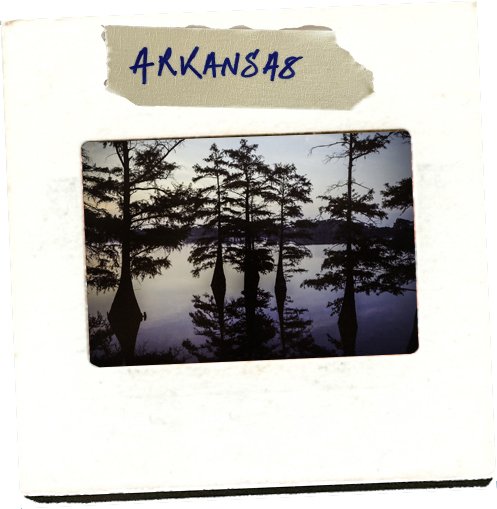
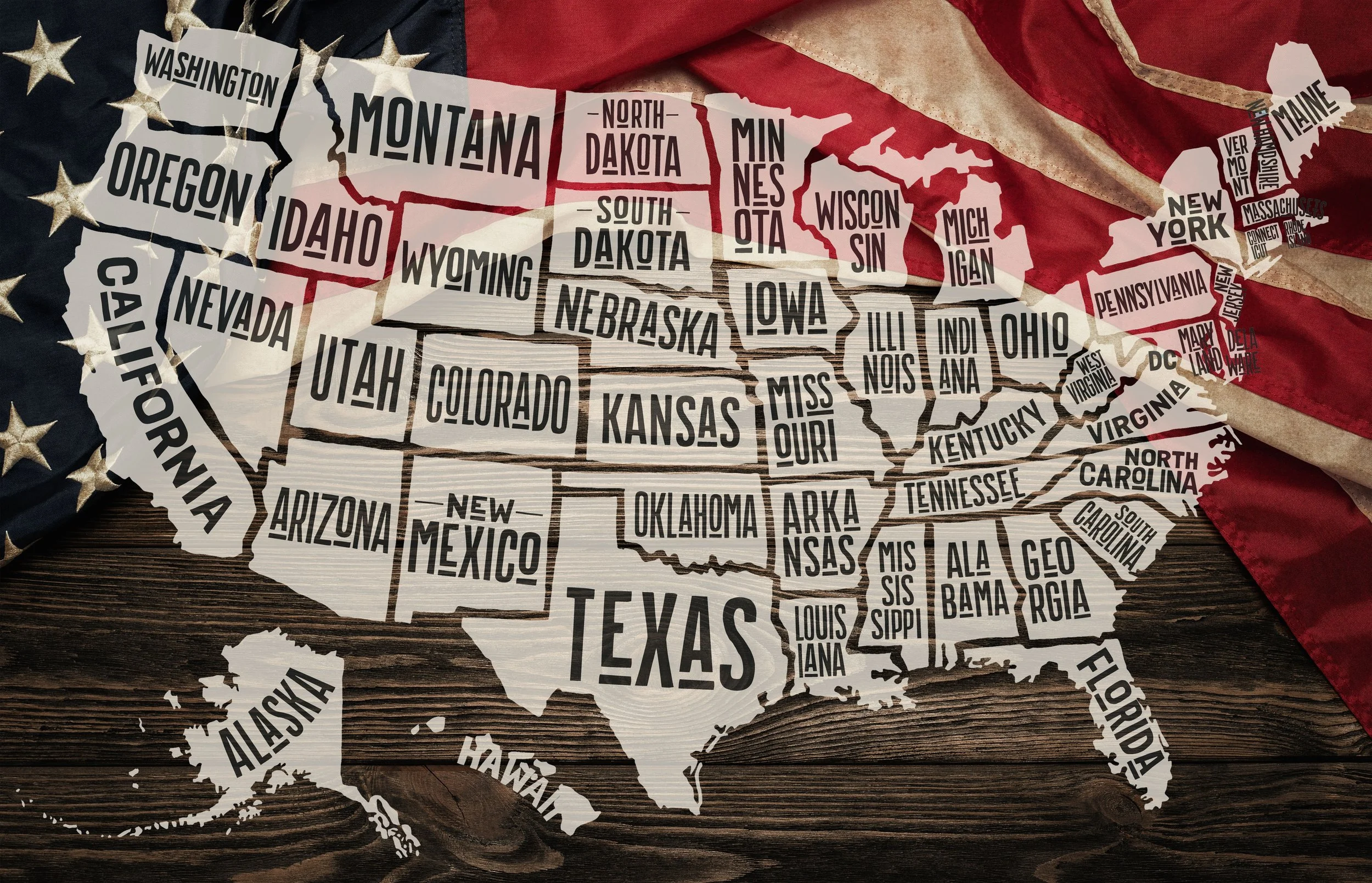
En route to…