Louisiana: all that jazz!
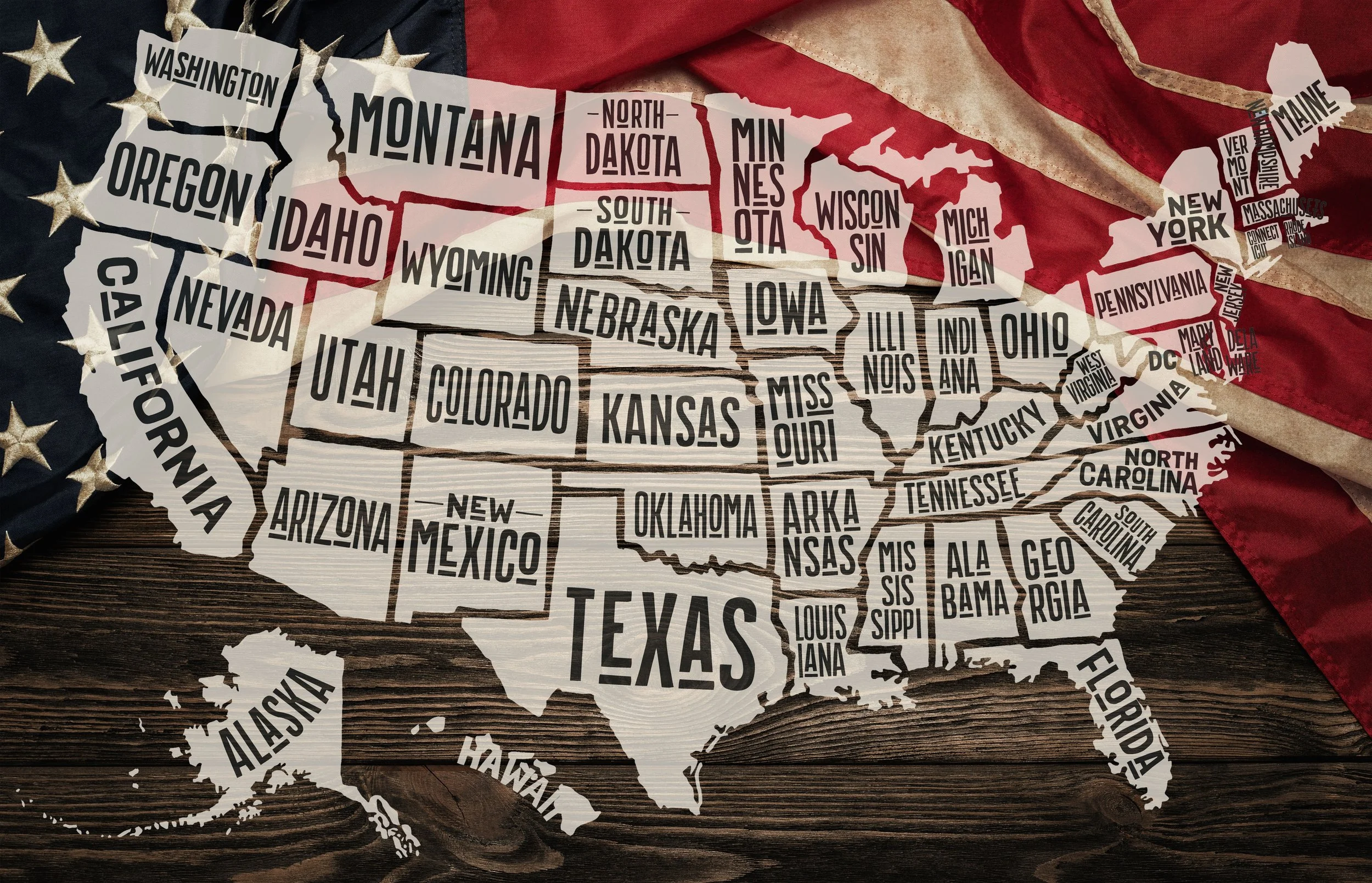
Like every morning, we roughly draw a line on the map. Today we enter Louisiana.
And once again, at some point, we part ways with the map. The light suggests another direction and we follow.
A short detour even takes us briefly into Arkansas, just long enough to photograph the “Welcome to” sign. A preview of another chapter. For later.
Back in Louisiana, the first impression is misleading. The land looks richer, almost prosperous. Large farms, neat fields, well-kept houses. It feels like a wealthier state. Turns out it isn’t. I simply happened to enter through a fortunate corner of it.
Not far in, we reach the spot where Bonnie and Clyde were ambushed.
It’s easy to imagine the scene once you stop and look around. Lawmen hiding in the bushes for three days, waiting for a car that might never come. Bonnie and Clyde driving carefree down this remote road, somewhere between small towns and nowhere. Then the sudden explosion of gunfire.
The place is calm now. People come to leave small offerings. Lipsticks and purse mirrors for Bonnie. Coins or stones for Clyde. Bullets for both.
Mae asks me what I would leave if I had to. An empty roll of film, I guess. The symbol of what made them famous in the first place: images.
While we stand there talking, vultures start circling above the trees, patient and hopeful.
Not today, guys.
The sunset is catching us while we cross Lake Pontchartrain into New Orleans. Twenty-two miles of water and sky. Pelicans glide past the car as if escorting us into the city.
The French Quarter is exactly what everyone imagines. Music pours out of open doors. Costumes, laughter, brass bands on street corners. Loud and bright and festive.
The thing is, it doesn’t feel fake. New Orleans doesn’t imitate the spectacle people expect. The spectacle is the culture. Under a neat design of patterns, New Orleans reveals itself as a geometric mix‑up of walks of life, styles, dimensions and sizes. No two parades, no two bands are the same.
Musicians play everywhere, some of them brilliant. Painters and caricaturists line Jackson Square. Some sleep on benches with their guitar case as pillow before starting another day.
One painter catches my eye. His canvases show empty streets at dusk, quiet cafés, awnings under fading light. No crowds. No noise. Just stillness. He describes his work as “a kind of Edward Hopper.” Now that he says it, I see it immediately. He paints absence.
I take his portrait while we talk. Pantos glasses, thick moustache, only the hat isn’t straw. We could just as well have been in the South of France in the sixties, sharing wine with Picasso and Matisse.
On our quest to leave the French Quarter, we set up a dinner in an Ethiopian restaurant that sits well outside the tourist streets. We meet with Clare, Mae’s niece, who has lived here for several years. By the time we walk there, night has already fallen.
At one point we reach a wide avenue under the massive overpass of the I-10. A parade appears under the bridge. A high-school marching band. Hundreds of students in uniform, each instrument section ten students deep. Trumpets bounce off the pillars. Tubas shimmer under the faint streetlights. The whole procession moves through darkness like a river of sound.
I step off the curb, drawn toward the music, more interested in the parade than the street.
Cars disagree.
One of them rushes past inches from my knees before I jump back. I eventually circle around and reach the edge of the procession where the drums vibrate through the ground.
No light, no pictures. But the sound alone gives me goose bumps.
At the restaurant, Clare greets us with the kind of energy that explains why she came here in the first place. Curious, open, absorbing everything around her. New Orleans clearly suits her.
On the ride back, the Uber driver spends the entire trip complaining about California gas prices and environmental policies.
Whatever.
The next morning I wander along the docks early, when the light is still soft. Three National Guards stand nearby for reasons that aren’t entirely clear.
One of them notices my camera. “You shoot film?”
We talk for a few minutes and when I ask if I can take his portrait he agrees immediately, proud. When the camera comes up, his face turns suddenly serious. He wants the picture alone. I shift slightly to include his colleagues in the background. “The light’s better from here.”
A few days earlier, I reckoned that if I kept shooting at the same rate I would run out of film before the end of the trip.
That realization leads me to Jibran, proud owner of the only film shop in New Orleans. The place doubles as a small gallery for local photographers. Film, darkrooms and the strange persistence of analog photography make for a good conversation.
By the time we leave, he suggests the idea of exhibiting some of my work there one day.
Careful, friend. I might take you up on that.
Eventually we leave the city behind and head toward the bayou. A long awaited moment of the trip. This is where, once again, Louisiana becomes something else entirely.
Jessica and Mike take us kayaking along the Pearl River system, a maze of waterways branching into East Pearl, West Pearl, Middle Pearl and even something called Middle Middle Pearl (go figure). Cypress trees rise straight out of dark water, their branches draped with Spanish moss.
Jessica guides the kayak so smoothly I barely feel the water beneath us. She grew up here and knows every bend of the river, every knee of every tree.
She shares her sadness about the deviations of the tourism industry. Tour operators like to invent stories about Indians hanging people from the cypress trees, she explains, the kind of myths tourists expect to hear.
Her view? “There’s enough history here for you not to have to invent one.”
From a kayak there is no such thing as stable framing. You see the image, raise the camera, and by the time you press the shutter you’re already a yard farther downstream. Sometimes you shoot the same scene twice just to increase the odds. On film, that counts.
We come back the next morning hoping for fog. Which we get.
Mist floats above the water for a few fragile minutes. The trees dissolve into soft gray shapes. Even the silence casts shadows here.
Once the sun is up, we drift near a rusted railroad bridge with the hope of something coming full steam up there. That would be an amazing shot. Jessica swears it should pass around this hour.
It never comes. First time in her experience. Of course it had to be today.
We end up floating there for a long time anyway, talking about Louisiana, the environment, politics, race.
The waiting becomes the moment.
The bayou marks the turning point of the journey. In the early miles of our way back, we come across Log Town, once a busy settlement built around the timber trade. Almost nothing remains now. In the 1960s NASA claimed the land to build a rocket engine test facility, forcing the population to leave. Other priorities at that time.
The place is quiet except for a fisherman casting lines into the river.
“The industry was huge here,” he tells me proudly. “We basically built Europe with the wood from around here.”
I let the claim hang in the air.
A few miles farther down a rural road, three silos stand in a field. Two are upright like ordinary farm structures. The third one has collapsed onto its side. With its conical shape it looks uncannily like an Apollo capsule that missed the ocean and landed in a field.
As if to complete the picture, on our way out of Louisiana, we pass near the NASA plant. In the distance the massive engines of a Saturn V rocket stand exposed like mechanical fossils.
I picture the sound it must have made.
Back deep in the countryside we come across a pickup truck sideways in a ditch, its front crushed against a tree. Smoke still drifting from the hood. Probably happened minutes ago.
I run to the driver’s door expecting the worst. I pop the airbags and see movement. Alive. Confused, but alive.
People stopped many times during this trip when they saw me standing on the roadside with a camera, asking if I needed help. It feels good to return the favor.
In the last miles of the trip, the usual end-of-journey questions come up. Highlights. Memories. What stays.
Some realizations:
Cities aren’t the America I came to see.
They are fascinating, alive, full of music and stories. But the places that stay with me are the smaller ones. Places where conversations happen naturally. Where time stretches enough for people to tell their stories. I think of John, the pastor in Alabama, Ed and Coralee in Georgia, Josh in Mississippi, Jessica and Mike here in Louisiana.
Somewhere along the road I also realised something about the project itself.
Other than a few rare exceptions, my travels have always been solitary ones. Riding together with Mae shaped the beginning of this journey and I wouldn’t trade those first weeks for anything, but somehow I feel the pull of that familiar rhythm of solitude again.
The road ahead will beat to that rhythm.
Texas and Oklahoma are waiting.
Note to self: Jazz has form, never symmetry.